
Seamless Serenity: A Microcement Case Study Inside a Modern Recovery Sanctuary
In the world of high-performance wellness, every surface is under pressure. Saunas push humidity and heat to extremes. Ice baths drag temperatures in the opposite direction. Flotation chambers demand absolute hygiene, while chromotherapy alcoves rely on continuous, joint-free planes to bend light into atmosphere. This case study takes us inside SOPRO — a next-generation recovery sanctuary — where Microfinishes' microcement system became the single material capable of holding all of it together.
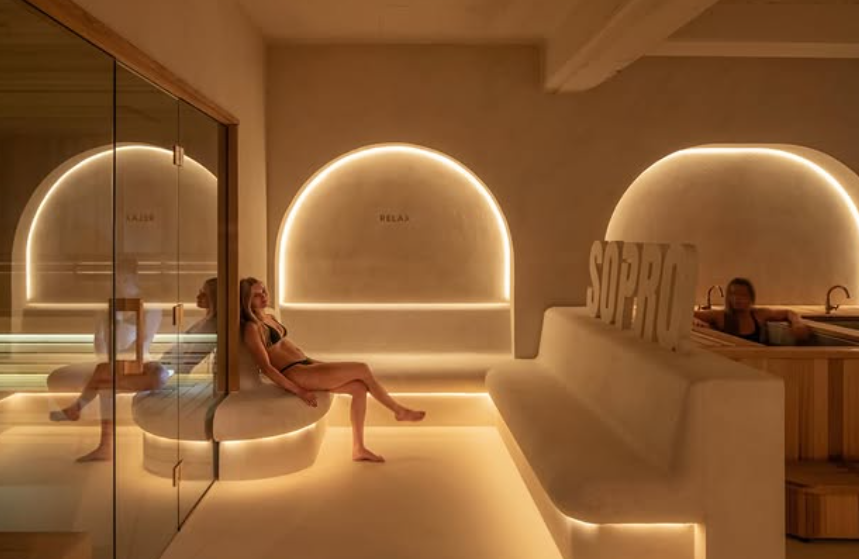
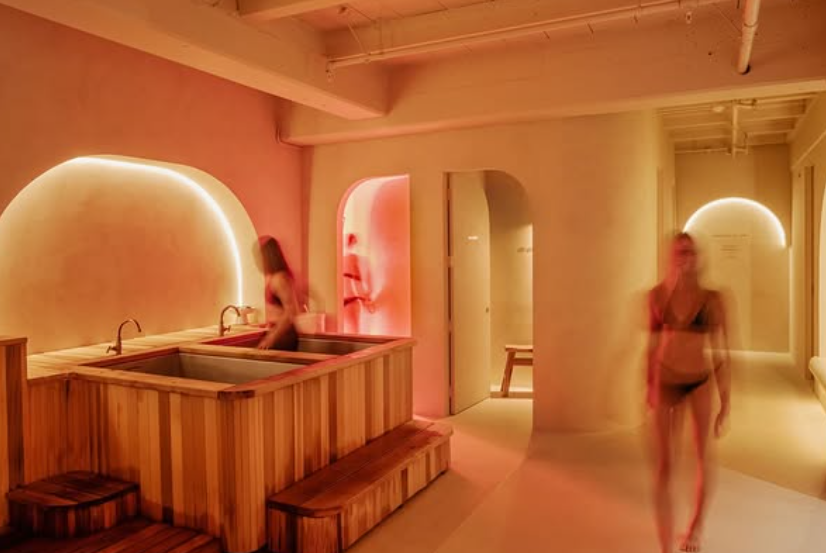
The architectural brief was ambitious. The space had to flow uninterrupted from a sauna, through a relaxation gallery, into a row of cedar cold plunge tubs, and onward to a private flotation chamber — without breaking visual continuity, without grout lines, and without compromising on the hygiene that wet wellness demands. The answer was a single, seamless envelope of microcement, applied across walls, floors, benches and built-in volumes alike.
Microcement application
Engineered for Humidity, Designed to Endure
Wet recovery spaces have always been a punishing environment for finishes. Conventional tile depends on grout that absorbs water, harbors bacteria, and cracks under the constant thermal swing between hot saunas and cold immersion. Microfinishes' microcement system eliminates that weak point altogether. Applied in continuous layers of just 2–3 millimeters and protected with high-performance polyurethane sealers, the surface becomes effectively waterproof, mold-resistant, and easy to maintain — even directly beside wooden plunge tubs, drainage points, and steam-saturated zones. Just as importantly, the flexibility of the system absorbs the thermal expansion that destroys rigid tile assemblies over time. The result is a finish that performs like industrial flooring but reads, underfoot and to the eye, like a single piece of polished stone.
Microcement application
A Continuous Canvas of Light and Texture
Beyond performance, this project reveals microcement's quiet superpower: its relationship with light. The warm, mineral-toned finish absorbs and diffuses illumination with an almost cinematic softness, which the architects exploited by tucking LED strips behind every arched niche and embedding chromotherapy lighting into the recovery sequence. Because the surface is monolithic, each light source becomes a sculptural moment rather than a fixture — a glow that bleeds into the wall instead of bouncing off it. The same material reads as warm gold in the sauna lounge, deep blush under therapeutic red light, and soft amber inside the flotation chamber. Walls, ceilings, steps, benches and reception volumes dissolve into a single sensory envelope, with nothing — no edge, no joint, no transition strip — to interrupt the meditative flow that contemporary wellness design demands.
The End of Tiles, Joints, and Compromise
For too long, designers of wet wellness spaces have been forced to choose between aesthetic ambition and practical durability. Tile delivered performance but fragmented the architecture into thousands of grout lines. Natural stone offered beauty but struggled with constant humidity, staining and movement. Microfinishes' microcement system closes that gap. It delivers the monolithic, sensory, light-responsive architecture that today's recovery and spa clients are asking for — without sacrificing the hygiene, waterproofing and longevity that wet environments demand. SOPRO is the proof: a project where a single surface system carries an entire recovery journey, from the first sweat of the sauna to the final stillness of the flotation pod, as one uninterrupted gesture. The age of tiles, joints and compromise in wellness design is, quite literally, behind us.
